The engineer behind the eight questions.
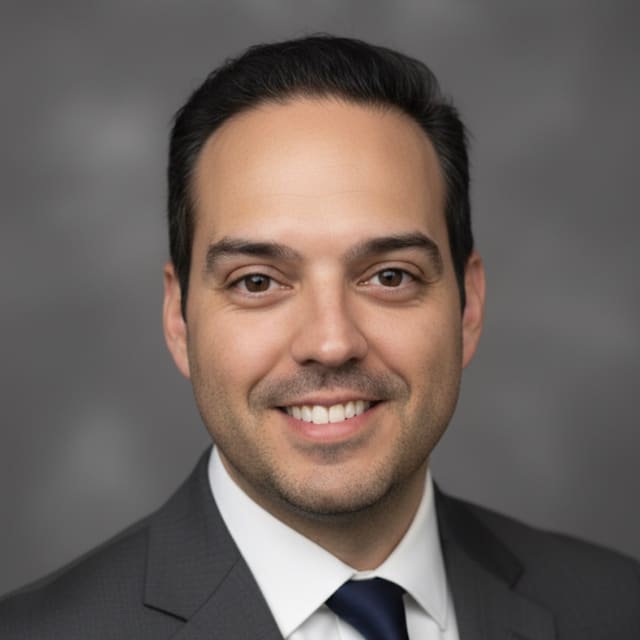
Vibe Reality Check helps any business that shipped software with AI ask better questions about what it now depends on. It was created for teams that shipped quickly and now want a clearer understanding of security, reliability, and growth readiness.
It is a George Rios Consulting LLC project. George wrote the eight questions, maintains the check, and personally reads and validates every request, even when the answer is that an engagement does not fit.
Who is behind the questions
George has spent more than 25 years building enterprise software for finance, healthcare, insurance, logistics, and SaaS companies, including over a decade in cloud architecture and the last three years working with AI: two as an applied AI engineer and the past twelve months building agentic systems. Most recently he served as Tech Lead and interim CTO at Catch Health, a health insurance marketplace serving more than 400,000 members. He wrote the eight questions because they are the ones he asks first when a business starts depending on AI-built software, and he personally reads and validates every request, even when the answer is that an engagement does not fit.
Before Catch Health he ran Plural Solutions, Inc. for 24 years, a custom software firm built on C# and .NET that delivered systems for enterprises across finance, healthcare, logistics, and SaaS and led cloud migrations for companies moving billions in transactions. In 2026 he founded George Rios Consulting LLC to focus on fractional CTO engagements, forward-deployed engineering, applied AI, and architecture advisory.
I read the code, test the system, and fix what matters. Not a slide deck and an invoice.
Learn more, including his full CV, at georgerios.com or connect on LinkedIn.
Why this check exists
AI coding tools are very good at getting to a working app. They are not good at the eight things that fail later: leaked secrets, test data touching real customers, over-broad access, unmanaged personal data, silent outages, code nobody else can maintain, backups that were never restored, and growth the architecture cannot absorb. The check turns those eight into questions anyone in the business can answer without reading code, and into a checklist a developer can act on.
Know what to fix first.
You may already have a system worth building on. The next step is finding out where it needs attention, with evidence. In a 30-day Architecture Discovery, George reads the code, tests the highest-priority gaps, and hands you a prioritized plan before any implementation begins.
- Map the system. What was built, how it fits together, and what it depends on.
- Examine the gaps. Hands-on review of security, reliability, and scalability where it matters most.
- Define the plan. What to fix first, what can wait, and what does not need a rebuild.
Start with a free 30-minute call. You describe the system, George asks about your highest-priority gap, and you both decide whether a discovery fits. No slide deck, no pressure. You leave with a written, prioritized plan you can hand to any developer. You provide read-only access to the code and hosting, and one kickoff call. George does the rest.
- Discovery, $3K. 30 days. Map the system, examine the highest-priority gaps, and hand you a written, prioritized plan.
- Plan and advisory, $6K. An action plan with a timeline, and George as your advisor while your team or your AI tools do the work.
- Hands-on rebuild, $15K. Full architecture and a hands-on rebuild of what needs it, alongside your team, then a handoff someone else can maintain.
It worked on the founder’s laptop. The database was the browser.
troubleshot.io looked like a product. It ran as localhost, and its “database” was the browser’s IndexedDB, so every time the founder closed Chrome, the data was gone. It had one user, and that user could lose everything by closing a tab.
Outcome. troubleshot.io went from a demo that lived in one browser tab to a deployed system with real infrastructure that someone other than George can run.
- Found · BackupsThere was no database, so there was nothing to back up or restore. Closing the browser destroyed the data.
- Found · EnvironmentsThere was no hosted environment. Production was a laptop.
- Found · HandoffsNo tests, no pipeline, no documentation. Nobody else could have picked it up.